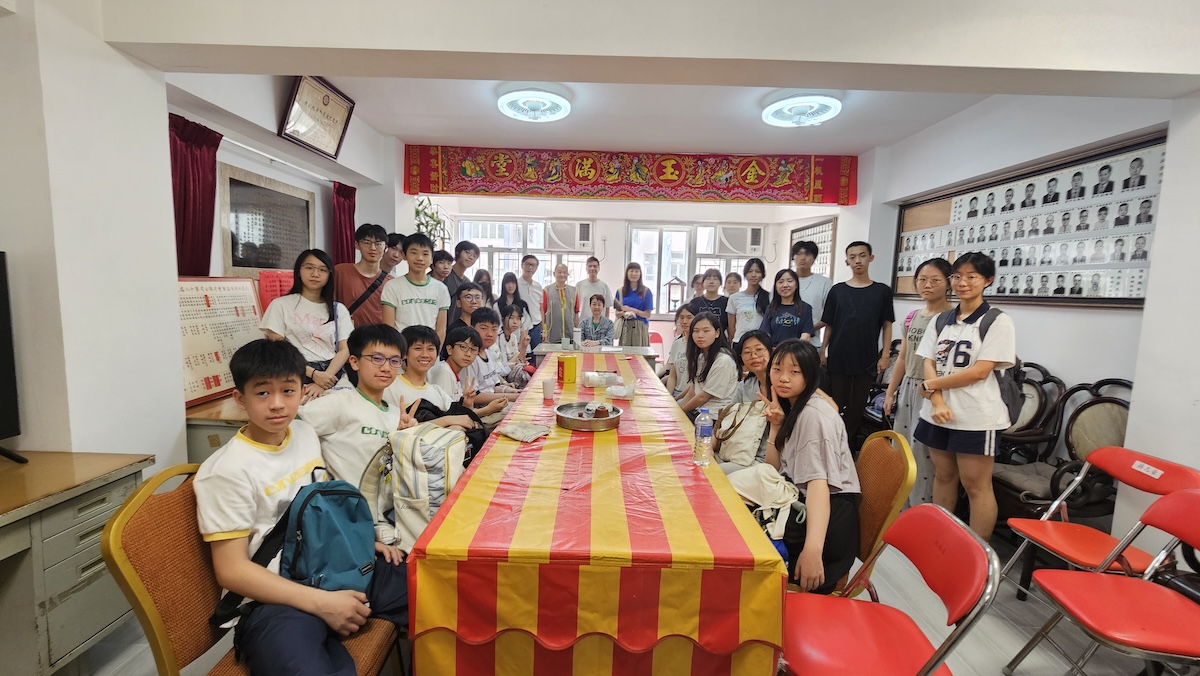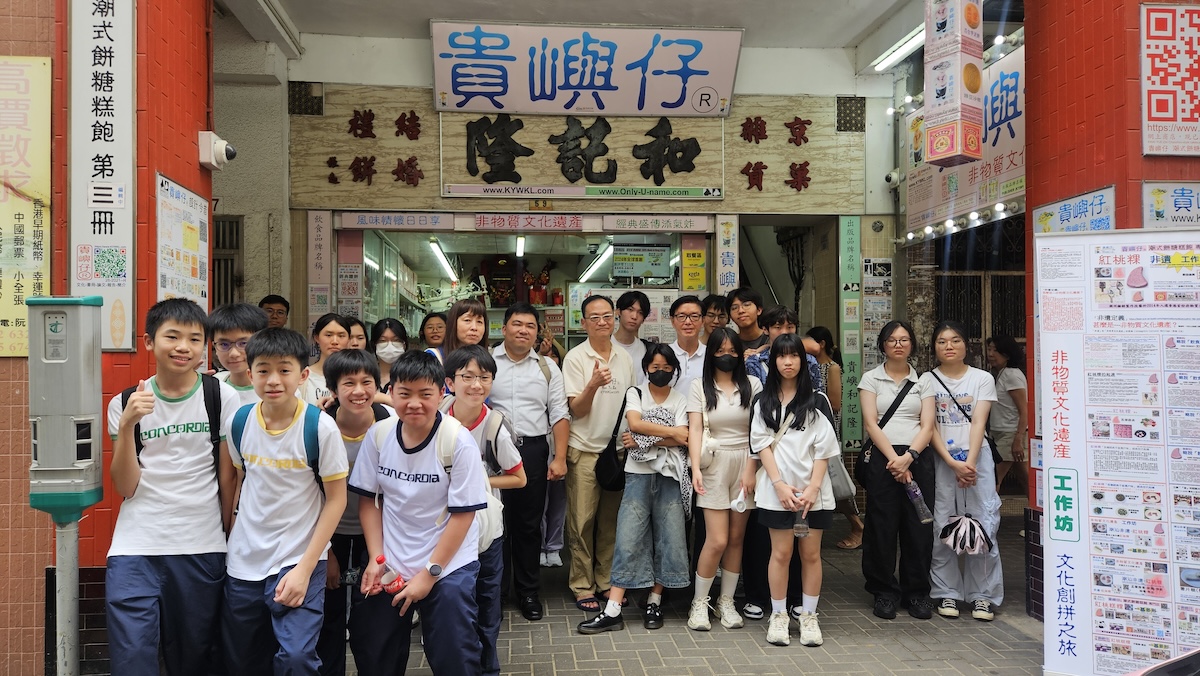
To broaden our students' humanistic horizons and deepen their understanding of local cultural diversity, our school organized a field study experiential activity on Chiu Chow culture in Kowloon City. This initiative led students out of the classroom and into an immersive field exploration, allowing them to historical landscapes and the deep cultural heritage of the Chiu Chow community rooted in Hong Kong.
The itinerary covered several distinctive local cultural landmarks, including the Kowloon City Chiu Chow Overseas Chinese Yu Lan Festival, the Kowloon City Tin Hau Temple, Carpenter Road Park, Kowloon Walled City Park, Woo Kee Lung (Kowloon City) Bakery, Chiu Fat Rice and Grocery, and Lok Hau Fook Restaurant. These locations carry the historical footprints of Chiu Chow immigrants who arrived in Hong Kong, worked with sheer diligence, and established their roots. Every heritage building, traditional old shop, and historical park encapsulates precious humanistic memories and the marks of different eras.
During the study, students gained close-up exposure to the ancestral sacrificial rituals and traditional belief systems passed down through generations. They also learned about the authentic Chiu Chow craftsmanship, unique culinary features, and traditional business philosophies steadfastly preserved by local heritage brands for decades. Departing from the two-dimensional and abstract texts found in textbooks, this field experience made Chiu Chow culture multi-dimensional, authentic, and tangible. Through meticulous observation and proactive inquiry, students deeply appreciated the invaluable spirit of the Chiu Chow community—how they congregated in a foreign land, supported one another, and resolutely safeguarded their cultural roots—while feeling the profound warmth of kinship and humanistic strength.
This cultural study was more than an outdoor visit; it was an invaluable edification of humanistic literacy. By witnessing firsthand the unique urban characteristic of Hong Kong where diverse ethnic cultures coexist and integrate, students not only enriched their historical and cultural knowledge and broadened their horizons, but also cultivated positive values of respecting diversity and embracing inclusivity. Through hands-on practice and reflection, the experiences and insights gained by the students far exceeded theoretical classroom learning, successfully fulfilling the educational goals of life-wide humanistic education.